
Starting Your Travel Journey? Here Are 5 Challenges to Expect
Almost every person has a moment when they decide: “It’s high time to go!” Not later, but now. There is anticipation, plans, and inspiration — you start looking at tickets, choosing accommodation, reading about a new place, and mentally walking through its streets.
However, beautiful pictures on social media rarely show the downside — the one that almost every beginner faces. The first journey is not only about emotions, but also about responsibility. You need to sort out the documents, think over the route, pack your clothes, budget, and be prepared for the unexpected.
Do not despair or worry. Such situations are normal. The main thing is to understand that difficulties are not a reason to cancel the trip, but just part of the process. If you are aware of potential problems in advance, you can prepare for them and approach them calmly.
Let’s look at five situations that most often become a challenge for novice travelers — and which are easy to turn into a valuable experience.
What Every Novice Traveler Should Expect: 5 Key Challenges
#1 Problems with documents
One of the most common and at the same time the most annoying mistakes is problems with documents. Most often, such problems arise due to ordinary inattention. It seems that the passport is in the drawer, which means that everything is in order. But at the last moment, it turns out that its validity expires in a couple of months, and it takes at least six months to enter the country. Or after buying tickets, you realize that you need a visa that no one thought about in advance.
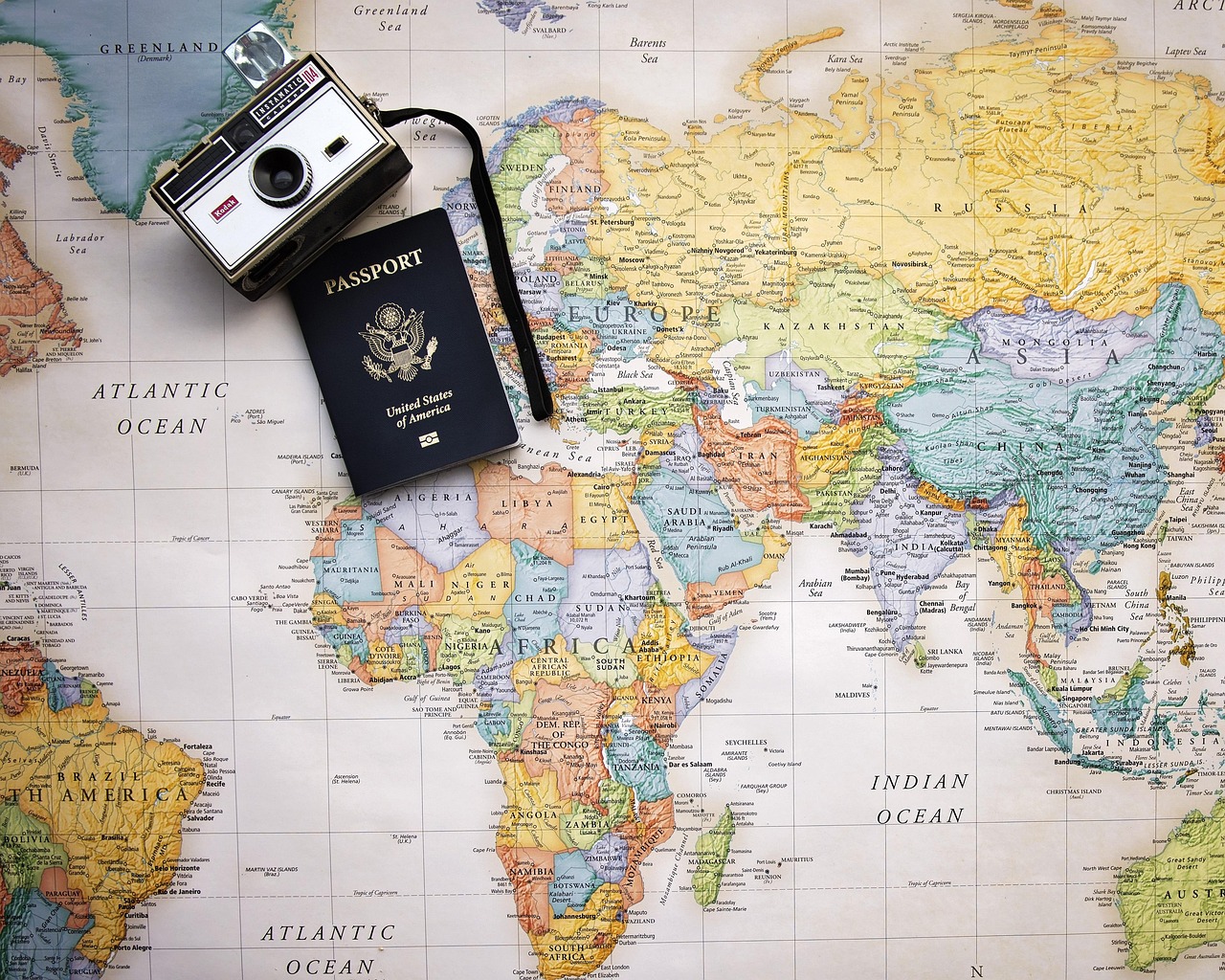
Often, many countries require additional documents: mandatory medical insurance with certain coverage, a return ticket, confirmation of an accommodation reservation, or additional certificates. Newbies often learn about these requirements too late — at the check-in stage or even at the airport. And then, instead of anticipating the trip, stress appears.
The first rule that will help avoid such situations is to check the documents before buying tickets. Make sure that the passport is valid for a sufficient period of time, find out the visa requirements for citizens of your country, and clarify the conditions of entry on official resources. The second important step is to arrange insurance in advance and save all confirmations in electronic and paper form.
#2 Lack of 24/7 mobile connectivity
Another problem that newcomers think about upon arrival is the lack of a stable mobile connection. While you’re at home, everything seems simple: the Internet is always at hand, the navigator is working, and a taxi can be called in one click. But in another country, the usual pattern is changing rapidly.
The first thing travelers face is expensive roaming. A few minutes online can cost you enough to have dinner at a local cafe. The second common story is the purchase of a local SIM card. At first glance, this seems like a profitable solution, but in practice, it is not so simple: you need to find a communication salon, figure out the tariffs in an unfamiliar language, and spend time on registration.
That is why more and more travelers prefer to take care of communication in advance and issue an eSIM, a fully digital SIM card that connects before departure. No queues, no plastic, no replacement of the main card. You arrive, and the Internet is already working. This means constant access to the navigator, booking services, banking apps, and messengers.
The advantage of eSIM is convenience and flexibility: you can choose the appropriate plan for a specific country or for several countries at once if the route includes transfers. Many services offer wide coverage and clear packages with no hidden conditions. For example, solutions such as eSIM Plus provide a stable connection in different regions of the world and allow you to connect in just a few minutes.
#3 The language barrier
The language barrier is another fear that often stops novice travelers. It seems that without fluency in a foreign language, the trip will turn into a series of awkward situations. But in practice, everything turns out to be much simpler. Firstly, in most countries, especially in tourist destinations, there will always be people who speak the international language of communication — English. Employees of airports, hotels, cafes, museums, and transport companies are usually ready to help and are used to guests from different parts of the world.

Secondly, modern technology removes most of the stress. If you have access to the Internet, an online translator is always at hand. A couple of seconds, and the desired phrase is already on the screen. Moreover, many apps allow you to download language packs in advance and use the translator offline.
Finally, do not forget about the most important thing — the human factor. Smiling, gestures, patience, and kindness sometimes work better than any words. Traveling is not a grammar exam, but a live conversation.
#4 Cultural differences and local etiquette
The difference in cultures and rules of conduct is one of those aspects of travel that is especially noticeable to beginners. What seems familiar and natural to you at home may be perceived differently in another country. For example, the manner of greeting, the volume of speech, queue rules, a place for shoes in the house, restrictions on photography — all this can be very different from the usual.
The specifics of behavior depend not only on the country, but also on a specific person or region. In some places, straightforwardness and openness are valued, while in others, restraint and respect for personal space are valued.
Understanding and respecting these differences helps avoid awkward situations and unintended resentments.
#5 Scams and minor frauds
Fraud and petty deceptions are a reality for many tourists, especially newcomers. “Tourist traps” can manifest themselves in inflated prices for food, drinks, or souvenirs near popular attractions, as well as in the intrusive services of guides or “assistants” who promise something for fabulous money.
Pickpockets are active in crowded places such as markets, squares, or transportation hubs. To reduce the risk, keep your bag in front of you, don’t carry large amounts of cash in one place, and keep a close eye on your belongings.
Care and simple safety measures allow you to enjoy your trip without losses and unpleasant surprises.
As you can see, it’s not so scary to start traveling if you know what you should pay attention to so as not to get into an unpleasant situation at different stages of the journey. Therefore, put fear aside, and plan your first trip out of nervousness!