The Best Pacific Northwest Road Trip from Portland: Routes, Stops, and How to Plan Yours
There’s something about the way a road trip from Portland, Oregon, gets under your skin. You wake up in a city wrapped in coffee shops and tree-lined streets, and within an hour you can be staring at a glacier-capped volcano or watching the Pacific crash against basalt cliffs. AAA reported that 87% of Memorial Day 2025 travelers chose road trips over flying, and few cities in America put you within reach of so many different landscapes as quickly as Portland does.
Portland sits at the meeting point of mountains, ocean, high desert, and old-growth forest. That’s not marketing; that’s geography. Whether you have a long weekend or two full weeks, you can build a route that suits the time you’ve got and the kind of scenery you’re after.
Here’s how to plan a Pacific Northwest road trip from Portland that actually delivers: three routes worth driving, plus everything you need to know before you turn the key.
Why Portland Is the Best Starting Point for a Pacific Northwest Road Trip
Most great American road trips ask you to drive several hours just to clear the metro area before the scenery starts. Portland doesn’t work that way. Mount Hood is roughly 90 minutes east. The Oregon Coast is about 90 minutes west. Crater Lake National Park is around four hours south. Seattle, the San Juan Islands, and Olympic National Park are all within a day’s drive north.
Add to that an international airport with direct flights from most major US cities, plenty of vehicle pickup options if you’re flying in, and a downtown worth a night before you leave town, and Portland becomes one of the easiest places in the country to launch a road trip from.
Route 1: Mount Hood and Columbia River Gorge Loop (3–4 Days)
If you only have a few days, this is the route to pick. It packs in waterfalls, a glacier-capped volcano, and one of the most dramatic river canyons in the country, all within a couple of hours of the city.
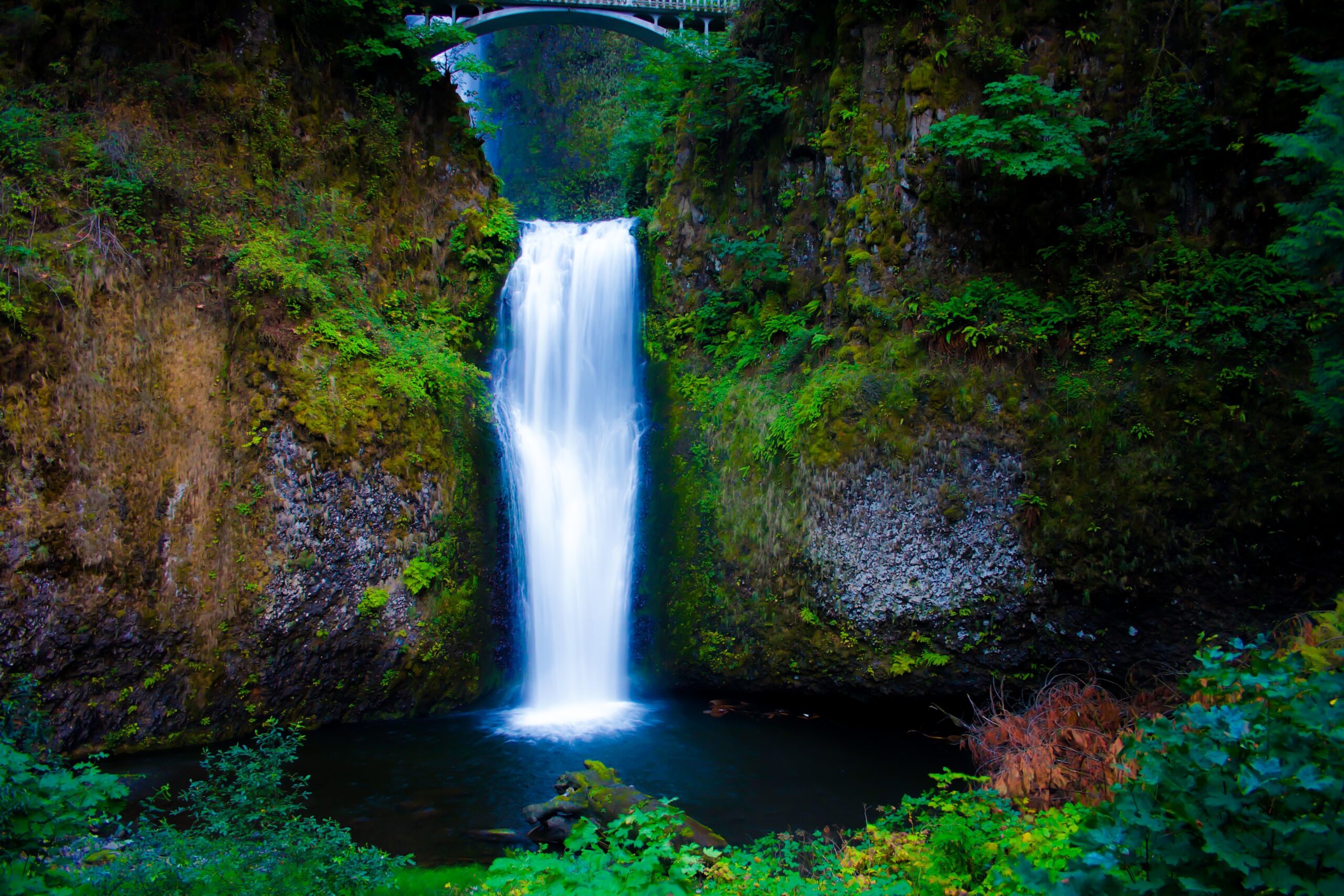
Head east out of Portland along the Historic Columbia River Highway and you’ll quickly hit the Columbia River Gorge, a corridor where the river has carved its way through the Cascade Range over millions of years. The headline attraction is Multnomah Falls, a 620-foot two-tier waterfall that lives up to every photo you’ve seen. Get there early; the parking lot fills by mid-morning in summer.
From the gorge, swing south toward Mount Hood. At 11,249 feet, it’s Oregon’s highest peak — a dormant volcano with a year-round ski area on its flanks. Stay a night at the historic Timberline Lodge if your budget stretches that way, or hike a section of the Pacific Crest Trail that loops around the mountain’s base. Close the loop through Hood River, where the orchards along the Fruit Loop scenic drive offer apples, pears, and cider in season.
Route 2: Oregon Coast Along Highway 101 (4–6 Days)
Got a few more days? Point your wheels west and pick up Highway 101, which runs roughly 363 miles down the Oregon coast. Unlike most of the West Coast, every inch of that coastline is public. No private beaches, no resort gates. Just road, sea, and pull-outs.
Start in the north at Cannon Beach, where Haystack Rock rises 235 feet straight out of the surf. From there, work your way south through Tillamook (yes, the cheese is worth the detour and yes, the factory tour is free), then on to Cape Perpetua for cliff-top views of the Pacific. Further south, Florence puts you next to the Oregon Dunes, a stretch of sand you can sandboard down if you rent a board in town.
Cape Lookout State Park and South Beach State Park both have RV-friendly sites if you’re traveling in a campervan. Reserve early in summer; the Oregon Coast doesn’t sleep on its parks.
Route 3: Crater Lake, Bend, and Smith Rock (6–8 Days)
If you’ve got a full week or more, this is the big one. Head south through the Willamette Valley and into the southern Cascades to reach Crater Lake National Park, home to the deepest lake in the United States at 1,949 feet. The lake sits inside the caldera of Mount Mazama, a volcano that collapsed roughly 7,700 years ago. The water is so blue it looks edited.
From Crater Lake, drive north to Bend. The town is high desert outdoor central: breweries, mountain biking, river tubing, and easy access to a chain of Cascade lakes. After a couple of nights resting up, head 30 minutes north to Smith Rock State Park. This is widely considered the birthplace of American sport climbing, and you don’t need to climb to enjoy it. The Misery Ridge Trail (shorter and less miserable than the name suggests) gives you a sweeping view down to the river and the rock formations below.
What to Drive: Why an RV (or Campervan) Makes Sense Here
The Pacific Northwest is one of those parts of the country where the gap between towns can stretch, and where the towns you do hit aren’t always overflowing with hotel options. That’s exactly the situation an RV or campervan was built for.
Sleeping in your vehicle means you can wake up at the trailhead instead of driving an hour to reach it. It also means you can string the three routes above together without scrambling for accommodation each night. Portland has become one of the easier US cities to pick up a campervan or RV thanks to a growing number of rental hubs in the area. If you’re not sure what’s available, or how Portland prices stack up against picking up in Seattle or San Francisco, it’s worth running a side-by-side check. Marketplaces that compare RV rentals in the USA pull live pricing from multiple brands across major cities, which makes the where-to-start decision a lot faster.
For a couple traveling for a week, the math tends to favor a campervan over the hotel-plus-rental-car alternative once you account for accommodation, parking, and the flexibility of having a kitchen on board.
When to Go and How Long You’ll Need
The sweet spot for a Pacific Northwest road trip is late June through mid-September. That window gives you full access to Crater Lake’s Rim Drive (closed by snow much of the rest of the year), reliable weather on Mount Hood, and the long evenings the Oregon Coast is known for.
May and October are quieter, with fewer crowds and lower campsite prices, but you’ll need to check road closures at higher altitudes. Memorial Day and the July 4 weekend are the busiest stretches at every state and national park in the region. Book your campsites and your vehicle six to eight weeks ahead if you want options. Aggregators like Campervan Planet make this easier by showing real-time availability across multiple rental brands in a single search, so when one company runs out of stock you can see at a glance who still has the right vehicle for your dates.
As for length: three days covers the Mount Hood loop, five gets you a comfortable Oregon Coast trip, and seven to eight is the right length for the full Crater Lake route without rushing.
Practical Tips Before You Hit the Road
Do you need a special license to drive an RV in Oregon? No. A standard driver’s license covers Class B and Class C campers, which is what most rental fleets carry. Class A motorhomes (the big bus-style ones) are also fine to drive on a regular license, but they’re harder to park and harder on fuel.
Where can you park overnight? Oregon State Parks have a strong network of RV-friendly sites: Cape Lookout, South Beach, and L.L. Stub Stewart are good options near the routes above. Reserve through the Oregon State Parks website. For free dispersed camping, the Bureau of Land Management allows it on much of its land in central Oregon, especially around Bend, and the Recreation.gov app shows what’s available where.
What does camping cost? Plan on $30 to $60 per night for a state park RV site with hookups, slightly more on weekends and around holidays. National forest campgrounds are cheaper but rarely have hookups.
How much fuel will you burn? A mid-size campervan averages 12 to 15 mpg. The Crater Lake loop is roughly 800 miles round trip from Portland, which works out to around $200 to $280 in fuel at current prices.
What apps should you have on your phone? iOverlander for finding camp spots and showers, Recreation.gov for federal sites, AllTrails for hikes, and GasBuddy for the inevitable fuel-stop comparisons.
Closing Thoughts
The Pacific Northwest is one of those landscapes that doesn’t quite seem real until you’re standing in it: basalt cliffs, glacial blue lakes, ancient forests, dunes that rise out of nowhere. Starting in Portland, you’re not picking between mountains and ocean and desert. You’re getting all three on the same trip.
Pick the route that fits your week, book ahead in summer, and leave room in the schedule for the unplanned stops. Those are usually the ones you’ll talk about later.

You May Also Like
10 Reasons You Should Visit Zakynthos Instead Of Santorini
Where To Stay In Athens: AthensWas, A Spectacular Athens Hotel That Combines Luxury With Design