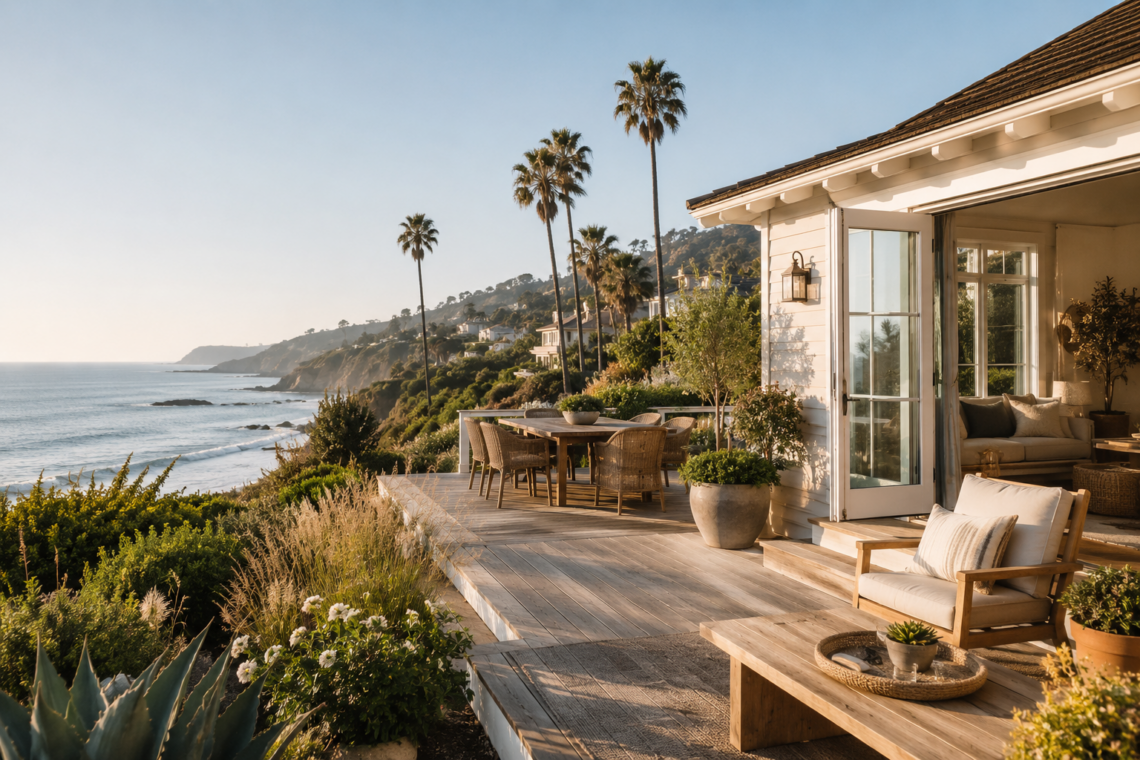
Planning a Summer House in California: Everything You Need to Know
A summer house in California is a seasonal commitment, not a year-round one. That distinction shapes nearly every decision differently than a primary home purchase.
From Lake Tahoe to Santa Barbara to wine country, California’s seasonal home markets each come with their own climate, access, and logistics considerations.
Set up that planning the property and planning the logistics of getting there are equally important parts of the process.
Planning a Summer House in California for Seasonal Living
California’s seasonal home markets vary dramatically by region; coastal towns like Santa Barbara and Carmel, mountain destinations like Lake Tahoe, and inland wine country like Napa each offer a different version of a “summer house”.
Climate and fire risk.
California’s wildfire season has shifted regional desirability and insurance availability significantly over the past several years. This is one of the most important reasons to research those insurance fees before falling in love with a specific location.
Defensible space and building codes.
California’s WUI (Wildland-Urban Interface) codes apply to many seasonal properties in higher-risk zones. It’s a good idea to review and thoroughly understand these requirements before you purchase a property in the state.
Seasonal occupancy patterns
HOA dues structures and utility setup are directly related to seasonal occupancy patterns. Some communities offer seasonal rate adjustments for properties occupied only part of the year.
Water access and rights
These matter more in California than in other states. Confirm well versus municipal water status and any usage restrictions for properties outside major metro areas.
Distance from primary residence
The distance from the primary residence shapes how often you’ll realistically use the property. A 6-hour drive limits spontaneous weekend trips in a way a 2-hour drive does not.
Local market timing
Heading into spring, buying in fall or winter can mean better negotiating leverage.
Furnishing and Preparing a Seasonal Property Without Overcommitting
Seasonal properties don’t need to be furnished to the same standard as a primary residence. But climate-appropriate furnishing matters, especially in mountain properties facing snow load and temperature swings. Furniture that is built for the climate will last longer and save you money on your furnishings in the long run.
Closing up a property for the off-season requires its own checklist. Winterizing pipes in mountain locations, securing against pests, and arranging for periodic check-ins are important to preserve the value of your property.
Deciding what to bring from a primary residence versus buying new for the seasonal property is a practical budget decision that affects how much needs to be transported.
A local property manager or caretaker service is worth the cost for owners who can’t check on the property regularly between visits.
Vehicle planning matters here too. Many seasonal homeowners want a car at the property without giving up their main vehicle at home. Plan by hiring a car shipping service that works with seasonal homeowners.
Before you move into your new seasonal home, it’s a good idea to confirm internet and cell service reliability before committing to remote work plans from the property. The more remote mountain or wine country locations often come with spotty service, so plan and check out connectivity options before you move in or come for a visit.
Everything You Need to Know About Coordinating Cross Country Car Shipping Services
For owners purchasing or furnishing a California seasonal property from out of state, car shipping services solve a specific problem: getting a vehicle to the property without a multi-day drive each way.
These services typically offer both open and enclosed transport options. Open carriers work well for standard vehicles. Enclosed transport is worth considering for higher-value cars or routes through extreme heat or mountain weather.
California’s size and geographic diversity affect transport routing. A property in Tahoe and a property in Santa Barbara have very different delivery logistics despite both being “California”.
Getting a clear car shipping quote or estimate that accounts for the specific destination, including mountain access or seasonal road closures, prevents surprises on delivery day.
Booking 3-4 weeks ahead of the season’s start gives car shipping services enough lead time, particularly during peak relocation season in late spring.
Ask directly about pickup flexibility and tracking updates if you want to prevent problems with the service you’re using. This is useful for owners coordinating delivery around their own travel schedule rather than a daily routine.
Seasonal property logistics differ from a standard move. Reviewing a transport provider’s experience with mountain or remote-access routes specifically is worth doing before booking. Before booking a car shipping service, look at how the transport provider approaches routes with limited seasonal access.
What to Confirm Before the Season Begins
Confirm insurance coverage specifically for the property’s seasonal status. Some policies require notification if a home sits vacant for extended periods. It’s also a good idea to check fire insurance availability early in high-risk zones. California’s market has tightened significantly, and some areas require state-backed FAIR Plan coverage.
Property tax implications can differ for seasonal versus primary residences. This is also worth confirming with a tax professional before closing on a seasonal home in California.
If you plan to move in the late spring, confirm road access timing for mountain properties. Some routes have seasonal closures that affect both arrival and vehicle delivery scheduling.
Settling Into a Seasonal Rhythm Without the Stress
A summer house works best when the seasonal opening and closing routine is planned and repeatable rather than improvised each year. Sequencing property opening, vehicle arrival, and furnishing delivery in the right order prevents the first week of the season from feeling chaotic.
It’s a good idea to build local relationships with providers like caretakers, handymen, and even a neighbor who could check in on your property. This would pay off across multiple seasons.
California Department of Water Resources also gives you good insights into water rights and usage for properties that are outside of municipal systems.
Your goal is to have a seasonal property that feels easy to step into each year, not one that requires resolving the same logistics each time you visit.
Planning a summer house in California well means planning both the property and the logistics of reaching it. And the payoff is a seasonal rhythm that gets easier every year instead of harder.


You May Also Like

Being A Temple Instead Of Visiting Temples-My Visit To An Orphanage In Sri Lanka

Yogi’s Paradise And Grill- A Great Restaurant in Bali