Santorini vs Mykonos: Which Island Is Worth Visiting
Santorini and Mykonos show up on almost every first-time Greece list, and they get bundled together so often that people assume it’s the same trip with a different ferry ticket. It isn’t. One island is built around a view you’ll still be thinking about months later. The other is built around long beach days and nights that end after sunrise.
I can’t tell you which one is better, but I can help you work out which one suits you. Here’s how they compare.
The Short Answer
Pick Santorini for scenery, romance and a slower pace. Pick Mykonos for beaches, nightlife and a sociable, stylish crowd. Both are expensive in summer, but they take your money in different places, which matters when you’re setting a budget.
How Each Island Looks and Feels
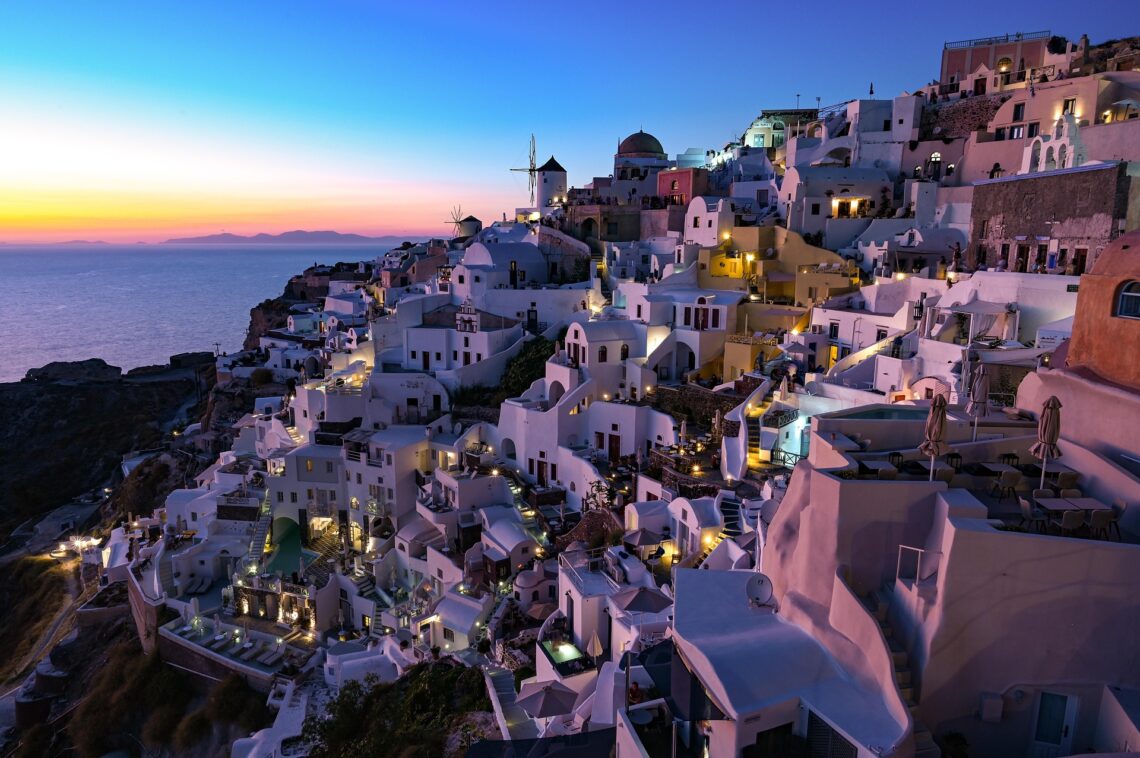
Santorini is what’s left of a volcanic caldera, so the island curves around a flooded crater with white villages perched on the rim. Oia, Fira and Imerovigli all look straight down at the water, and the drama is the whole point. You don’t need an itinerary to enjoy it. You just need a balcony.
Mykonos is flatter, drier and gentler on the eye. Chora’s maze of whitewashed lanes, blue shutters and bougainvillea is made for aimless wandering, and the windmills and Little Venice waterfront are the photos everyone takes. It feels less like a view you stand in front of and more like a town you settle into for a week.
Beaches: Mykonos Wins
This one isn’t close. Mykonos has Psarou, Paradise, Super Paradise, Elia and Paraga for the beach-club scene, and quieter stretches like Agios Sostis when you want sand and a taverna without the music.
Santorini’s beaches are volcanic, so the sand is black or red and the pebbles heat up fast. Perissa, Kamari and Red Beach near Akrotiri, which is often closed because of rockfalls but still admirable from a viewpoint, are the usual picks. They’re striking, but they’re a side dish, not the reason to go. If you like a swim before breakfast, base yourself on Mykonos. From the caldera towns on Santorini you’ll usually need a short drive or bus ride to reach the water.
Things to Do
Santorini rewards people who like to move. Walking the caldera path from Fira to Oia takes most of a morning and gives you some of the best views on the island for free. After that, think volcano and hot-spring boat trips, winery tastings built around Assyrtiko, the Bronze Age site at Akrotiri, and seafood down at Amoudi Bay. Claim your sunset spot in Oia early, because the best vantage points fill up well before the sun drops.
Mykonos is more about rhythm. Beach-hop, shop in Chora, then do the one thing plenty of visitors skip: take a boat to Delos, the uninhabited UNESCO-listed island that was one of ancient Greece’s most sacred sites. Check boat times before you go, since the crossing runs on a set schedule.
Nightlife and Food
Mykonos is the party island, and the reputation is earned. Beach clubs run into the evening, bars in Chora fill up late, and nobody thinks about dinner until well after 9 pm. Santorini is quieter. Evenings there mean a sunset at Oia or Imerovigli, a long dinner with a glass of local white, and an earlier night. The food is good on both islands, and both charge for the view.
What Each Island Costs
Neither island is cheap, and peak-season prices move quickly, so check current rates before you commit. On Santorini, the premium is the caldera-view room. A suit with that view in Oia typically runs €400 to €1,200 a night in summer, while a standard room in Perissa, Kamara, or Pyrgo can cost under €100.
On Mykonos, the cost sneaks up through beach-club sunbeds, minimum spends and late nights out. A pair of loungers at a public beach bar might cost €15 to €30, while front-row beds at the top clubs often start above €100 before you order a drink. The fast ferry between the islands takes about two hours and costs roughly €45 to €150 one way.
Travel in late May, June or September and prices on both islands ease off. July and August are the most expensive stretch.
Who Should Go Where
Santorini suits couples, honeymooners, photographers, wine drinkers and anyone happy to take stairs. It’s harder with strollers or limited mobility, since many villages sit on steep steps. Mykonos suits friend groups, beach lovers, nightlife fans and LGBTQ+ travelers, thanks to its long-standing reputation as one of Greece’s most welcoming islands. Families with young kids usually find Mykonos’ beaches easier than anything on Santorini.
Getting There and When to Go
Both islands have airports with seasonal direct flights from across Europe, and ferries run from Piraeus in Athens. Mykonos also has ferries from Rafina, a port closer to Athens International Airport. Crossing times depend on the vessel, so check the operator’s timetable. Shoulder season is the sweet spot: warm water, open restaurants and thinner crowds.
In July and August, Mykonos gets blasted by the meltemi wind, and Santorini’s caldera towns can feel packed once the cruise passengers arrive (Greece also charges a €20 peak-season cruise passenger fee at both islands). The two islands wind down in winter, so expect plenty of places to be closed.
Can You Do Both?
Easily, and plenty of travelers do. Three or four nights on each is a sensible split. A fast ferry links the islands, but schedules shift through the season, and the best rooms book out early, so the sequencing needs some thought.
If you’d rather not juggle ferry timetables, you can explore Greece with Travel Chasers on a group tour that pairs both islands, with the island order already worked out. Whichever way you plan it, lock in the ferry and your caldera-view room first, because those are the things that fill up fastest in peak season.
So which island is worth it? If your ideal day starts with coffee over the caldera, go to Santorini. If it starts with a swim and ends on a dance floor, go to Mykonos. And if you can’t decide, that’s a good problem to have.


You May Also Like

Castaway Resort, Koh Lipe Thailand-A True Tropical Hideway

Trapped in the Mosquito Netting-More Adventures From Raja Ampat